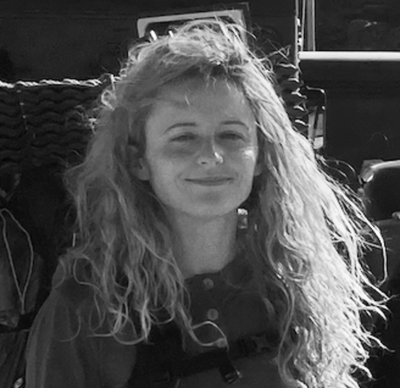
Profile


Tawatha T. Elguero

Based in Oslo, Norway.

Contact: collab.tawatha@proton.me

Instagram
BlueskyLinkedIn
I create research-led visuals that make biological structures, ecological relationships, and environmental processes clear, accurate, and engaging. My work is especially concerned with biodiversity, ecosystems, habitat restoration, and threatened landscapes.

My approach combines close observation, scientific research, visual storytelling, and collaboration with subject specialists. I am particularly drawn to aspects of the natural world that are difficult to see directly: hidden structures, overlooked species, remote environments, and the relationships that connect organisms to their habitats.


Background

My background combines self-directed study with formal training in scientific illustration through specialised courses, and the Illustraciencia Academy. I have worked with students, researchers, and environmental organisations, including the Roots & Shoots educational program of the Jane Goodall Institute in Spain.

Since 2018, I have been active in citizen science, contributing species observations across Europe through iNaturalist and supporting research projects through Zooniverse. I am also a member of the Guild of Natural Science Illustrators and DNT: The Norwegian Trekking Association.


Testimonials

“Ms. Elguero’s work is always carried out with great professionalism, commitment, attention to detail, talent, and care, which is evident in the final results.”

Marisa Mariñán, Coordinator of Roots & Shoots, Jane Goodall Institute Spain

”As a primatologist and researcher, I deeply value Tawatha’s work and perspective as a scientific illustrator. She has a remarkable ability to combine scientific rigor with artistic sensitivity, creating illustrations that are not only beautiful, but also meaningful and highly effective for science communication. Over the years, I have always been impressed by her professionalism, curiosity, and genuine passion for nature and science. I specially appreciate people capable of building such a strong bridge between art and science.” 

Dr. Miquel Llorente

Director, Master’s Degree in Scientific Illustration in Natural Sciences, Universitat de Girona

Director, Master’s Degree in Primatology, Universitat de Barcelona


“I came across Tawatha’s work by chance, and it was an amazing find. I needed highly specific hyperrealistic illustrations for a scientific article, and the result exceeded all my expectations. Even though the subjects were almost indistinguishable from one another, she captured each individual’s uniqueness perfectly while staying in close contact with me throughout the process for feedback. She was an abdolute pleasure to work with.”

Carla Pascual, Primatologist, UdG (Universidad de Girona)

Skills

Visual Communication
Scientific Illustration
Graphics
Research & Information Synthesis
Ecological Storytelling
Conservation Communication
Field Observation
Creativity and Innovation


Software

Adobe Photoshop
Adobe Illustrator
Adobe InDesign
QGIS
Blender

Tawatha T. Elguero       Scientific Illustration Visual Communication


Making the  
Invisible Visible


Revealing the structures, processes, and relationships
of the natural world through scientific illustration, and
visual communication.


Field Notes
Blog

Case Studies


CS-1

Marea Oslo
Marine restoration
Scientific communication · May, 2026


Diagrammatic scientific illustrations created as a social-media sequence explaining how kelp cultivation develops from controlled laboratory stages to deployment, growth and ecosystem formation in the Oslofjord.


Marea Oslo × Seaweed Solutions
Scientific illustration
Visual communication
Educational campaign
Oslo, Norway
April, 2026


Context


Marea Oslo is a non-profit working to restore the marine ecosystem of the Oslofjord.

This is a diagrammatic sequence showing how Seaweed Solutions and Marea Oslo work together through kelp cultivation to support the development of marine ecosystems. It is presented in a carousel format for social media publication.


Research & Development


From Cell to Ecosystem translates this process into a diagrammatic visual sequence, following cultivation from early cellular stages in the laboratory through rope seeding, transport and deployment in the fjord, to kelp growth, colonisation and ecosystem formation.

The visual language is intentionally minimal. Fine line-work and simplified forms keep the emphasis on process and progression, while a blue-to-green transition connects controlled cultivation with ecological development.

For the cellular stages on the cover, I used this scientific paper as reference.


CS-2

Lu Hsin 
The Oslo School of Architecture and Design
Information design · June, 2023


Created for a landscape architecture master’s thesis on an ethnobotanical garden in Taiwan. The infographic translates Taiwan’s natural forest vegetation into a visual system structured by altitude, temperature and humidity.


Lu Hsin · AHO 
Vegetation Zones
Information design
Master’s thesis
Taiwan | Oslo
August, 2023

Reviewed by:
Chih-Chieh Yu (游旨价)
Naturalist & plant biologist


Context

This infographic was requested by Lu Hsin, a landscape architect, during her final master’s thesis on an ethnobotanical garden in Taiwan at AHO – The Oslo School of Architecture and Design.

It shows the vegetation zones of Taiwan’s natural forests along gradients of altitude, temperature, and humidity. It explains how Taiwan’s forests change from lowland tropical and subtropical forests near sea level, through montane evergreen and conifer forests, and up to the subalpine and alpine vegetation found near the island’s highest peaks, such as Xueshan, 3,886 m.

Some captions from the location on-site:

A gorgeous high-elevation alpine pond called Cuei Pond / 翠池, surrounded by Taiwan fir — Abies kawakamii and 
Taiwan alpine juniper
 — Juniperus squamata. ©Lu Hsin


Research & Development


I was given an older scientific vegetation chart of Taiwan, which organised forest communities by altitude and differences between wetter and drier slopes. 


This diagram illustrates the elevation zones of vegetation in the mountains of central Taiwan. Online reference only. Original publication not directly accessed; source credited here: Ref.


I then introduced the logic of a bioclimatic classification chart to relate vegetation more clearly to temperature and moisture. 

Holdridge Life Zone Classification diagram by Peter Halasz, via Wikimedia Commons, licensed under CC BY-SA 4.0. Ref.1 , Ref.2


The old Taiwan vegetation chart gave me the local scientific information: the real forest zones of Taiwan, their altitude ranges, humidity differences, and characteristic species. The bioclimatic triangle gave me the visual and conceptual structure: a way to show vegetation as the result of climate gradients — warmer to colder, wetter to drier, and lowland to alpine.

I used this idea to make the final graph feel more like an ecological landscape.


CS-3

Black-capped Squirrel Monkey
Saimiri boliviensis
Species reconstruction

Carla Pascual
University of Girona January · 2023

Four hyperrealistic portraits commissioned by primatologist Carla Pascual at the University of Girona for research exploring the relationship between individual personality and vocalisations in Saimiri.


Black-capped squirrel monkeys
Saimiri boliviensis
Scientific illustration
Species reconstruction
Digital painting · Photoshop
2023


Context


I created four hyperrealistic portraits of Black-capped squirrel monkeys for a primatology study by Carla Pascual at the University of Girona, investigating the relationship between individual personality and vocalisations.


Research & Development


Because the monkeys were wild, the available reference photographs were often low quality, making individual identification the main challenge.


Working from limited, low-quality photographs of wild individuals, I reconstructed each monkey in Photoshop, focusing on subtle differences in facial structure, colouration and identifying features to make each portrait individually recognisable.


The aim was not simply to create realistic monkeys, but to produce accurate, recognisable portraits of specific individuals that could support the research.


CS-4

Vaquita Marina
Phocoena sinus
Conservation
Ongoing collaboration · 2022–present

Revealing the biology and conservation challenges of one of the world’s most endangered marine mammals through scientific illustration.


Collaboration


Julia Rouaux 
PhD Natural Sciences
Scientific illustrator 
Argentina


Vaquita Marina
Phocoena sinus
Scientific illustration · Conservation
Collaboration with Julia Rouaux
Digital painting · Information design
2022–present

Context


The vaquita marina (Phocoena sinus) is the world’s smallest porpoise and one of the most endangered marine mammals on Earth. Its range is limited to the Upper Gulf of California, Mexico. Only a handful of individuals remain, with 2025 monitoring efforts estimating approximately ∽10 vaquitas observed.

The main threat to the species is bycatch in illegal gillnets set for totoaba, an endangered fish whose swim bladder is highly valued on black markets. Despite the severe decline, conservation efforts continue to protect the remaining animals and support population recovery.

This project explores how visual communication can support awareness and conservation efforts by making its anatomy, biology, and threats more accessible.


Research & Development

I began this project in 2022 as an ongoing collaboration with Julia Rouaux, PhD in Natural Sciences and scientific illustrator, who has supervised me throughout the process to help ensure the accuracy of the data and information used in this project.

The project is ongoing. So far, I have reconstructed the skull and developed preliminary infographics on the species’ anatomy and conservation status, with further educational material still to come.

Close-up of a Vaquita skull study in pencil, showing tonal development - 2022. Tawatha T. Elguero

Research has been challenging because the population is extremely small and skeletal material is scarce. Some cranial elements, including the teeth and zygomatic arch, were missing from available references, so we contacted a vertebrate collection in Mexico to request additional specimen photographs.

Process view of a Vaquita skull illustration in development, showing digital rendering in PS alongside specimen reference - 2022. Tawatha T. Elguero


Visual Approach


The illustrations balances scientific accuracy with a clear visual narrative, combining anatomical information and conservation storytelling.


Illustration of a vaquita marina (Phocoena sinus) mother and calf - 2022. Tawatha T. Elguero


Vaquita skull final rendering:

Final rendered skull of a vaquita marina (Phocoena sinus). Mixed media — scientific illustration
 by Tawatha T. Elguero, 2022.


Research sources


Special thanks to The Vertebrate Collection of the Natural History Museum of Mexico, 
and to Dr. Sandra Martínez for their generous support and for providing the photographic reference material that made this part of the reconstruction possible.


CS-5

Great Cormorant
Phalacrocorax carbo
Digital rendering
Personal project · 2022


A personal scientific illustration of the Great Cormorant (Phalacrocorax carbo), developed while experimenting with ways to represent its distinctive plumage, anatomy and character. 

Lorem Ipsum...

Great Cormorant
Phalacrocorax carbo
Scientific illustration
Personal project
Digital painting · Photoshop
2022

Context


The personal illustration developed through close observation of the cormorant’s surface anatomy and plumage. I studied feather direction before rendering, worked separately on the texture of the beak and fine feather details, and experimented with highlights and directional light to describe the form. The final image combines these studies with scale information and female human iconography as a reference for the bird’s size.


Illustration process


Feather direction marked with arrows before drawing:


Beak texture:


Fine feather details:


Highlights on and off:


Iconography


I considered how scale was communicated. I chose a female human silhouette for the size comparison after checking online the widespread use of male figures as the default reference model in scientific graphics. The decision became part of the project’s broader exploration of how neutral visual conventions can shape scientific communication. 
Woman vs male average height comparison iconography - Tawatha T. Elguero


CS-6

Formosan Arboreal Landscape
Lu Hsin · AHO
Infographic
Collaborative project · 2022


A botanical infographic developed in collaboration with landscape architect Lu Hsin for her master’s thesis at the Oslo School of Architecture and Design, visualising native Taiwanese tree species and their ecological relationships.


Collaboration


Lu Hsin
Landscape Architect
Taiwan


Formosan Arboreal Landscape
Botanical infographic
Information design
Collaboration with Lu Hsin
Photoshop · Illustrator
2022

Context


This was a collaboration between Lu Hsin, a landscape architect, and me during her final master’s thesis on an ethnobotanical garden in Taiwan at AHO, the Oslo School of Architecture and Design.

Known as Formosa, or “beautiful island,” Taiwan is home to diverse and historic plant life, including Taiwania cryptomerioides, one of Asia’s tallest trees. The illustration presents 13 endemic and native species found in Snow Mountain, a serene area in eastern Taichung, Taiwan, symbolizing the island’s rich natural heritage.


Research & Development


Thirteen trees were hand-drawn in pencil by the two of us, while I designed the rest of the composition in Adobe Illustrator. The illustration uses a scale bar and a colour palette to depict the height and seasonal changes of these trees.

Close-up section of canopy trees with sunset, mountain, and details. Tawatha T. Elguero

The background image shows the silhouette of Xueshan Mountain, also known as Snow Mountain, which is 3,886 metres high.

Close-up infographic of root systems and color swatches. Tawatha T. Elguero

The roots were sourced from Wageningen University & Research Image Collections


CS-7

Roots & Shoots Diploma
Mixed media
Jane Goodall Institute Spain · 2019

A certificate designed for the Roots & Shoots youth programme, combining hand-drawn illustration with digital colour, typography, and layout.


Roots & Shoots Diploma
Jane Goodall Institute Spain
Illustration & graphic design
Ink · Digital colour · Photoshop
2019

Context


In 2019, I began to collaborate with the Roots & Shoots youth program by the Jane Goodall Institute in Spain. This is an institute founded by the late Jane Goodall, a primatologist and activist, known for her long study of chimpanzees at Gombe National Park in Africa. Her work led to pioneering findings in primatology, such as the observation of chimpanzee tool use, a discovery that forced the scientific community to rethink the definition of what “human” meant at the time.

The program takes positive action through local and international projects aimed at wildlife conservation, the environment, and local communities.

I volunteered on multiple designs, including a diploma handed to new Roots & Shoots group participants.


Illustration process


I combined hand-drawn dot-work with later digital colour refinement, combining a traditional illustration style with a finished digital touch.


In the digital post-production stage, the original hand-drawn dot-work was refined through colour-correction, texture work, typography, and final layout adjustments in Photoshop.


Chimpanzee Hand


A chimpanzee hand so that children can compare their own hands to those of one of our closest relatives and understand the functionality of the opposable thumb.


By comparing their hand with the illustration, children can explore how the opposable thumb supports gripping, climbing, touching, grooming, and manipulating objects, while learning how form relates to function in evolution.

Final version:

Chimpanzee hand anatomy study - Tawatha T. Elguero


Top © 2026 Tawatha T. Elguero